Flat Roofing in Bristol
- Clear, no obligation quotes
- Local, directly employed teams
- Work left tidy
Get a Free Quote
Send a few details and we'll be in touch shortly.
EPDM rubber, felt and fibreglass flat roofing across Bristol
Flat roofs have a poor reputation, and it is largely undeserved. The bad name comes from decades of thin pour and roll felt laid on roofs with no proper fall, which duly ponded and failed within a few years.
Modern systems are a different proposition, and a well built flat roof on an extension, garage or dormer will now comfortably outlast the felt roofs people remember. Bristol covers a wide spread of building ages, from Georgian and Victorian terraces in Clifton, Redland and Totterdown through to interwar semis and modern estates further out. Roof coverings vary just as much, so the right answer on one street is often wrong two roads away.
The three systems compared: rubber, felt and fibreglass
EPDM rubber is the system worth considering first for most domestic flat roofs. It is a single sheet of synthetic rubber, which on a typical extension or garage means no joints at all across the main field of the roof, and joints are where flat roofs leak. It is highly flexible, so it copes with building movement and temperature swings, and it stays flexible in cold weather rather than going brittle. Expected service life is commonly quoted at forty to fifty years, and it is installed cold, with no torch and no naked flame near the building. The trade off is that it is less resistant to point damage than fibreglass, so it is not the first choice for a roof that will be walked on regularly.
Felt, meaning modern high performance torch on built up felt rather than the old pour and roll, is a genuinely sound system when laid in two or three layers with proper detailing. It is well understood, economical, and easy to repair locally. Realistic life is around twenty to thirty years. The main considerations are that it involves hot work with a torch, which needs care near timber and adjacent buildings, and that it has more seams than a single sheet system.
Fibreglass, or GRP, is laid as a liquid resin over matting and cures into a single seamless rigid layer. It gives a hard wearing finish, which makes it the strongest candidate for a balcony, terrace or any roof that gets walked on, and it can be finished in a range of colours. Life is typically twenty five to thirty years. Because it is rigid it is less forgiving of structural movement, and it needs dry conditions and a competent installer to cure properly, so it is more sensitive to who lays it and in what weather.
In short: EPDM for most extensions and garages, fibreglass where the roof is a walking surface, and felt where budget is the main driver or the detailing suits it. Any of the three will outperform a badly built roof in a better material, which is why the next section matters as much as this one.
Recent flat roofing work
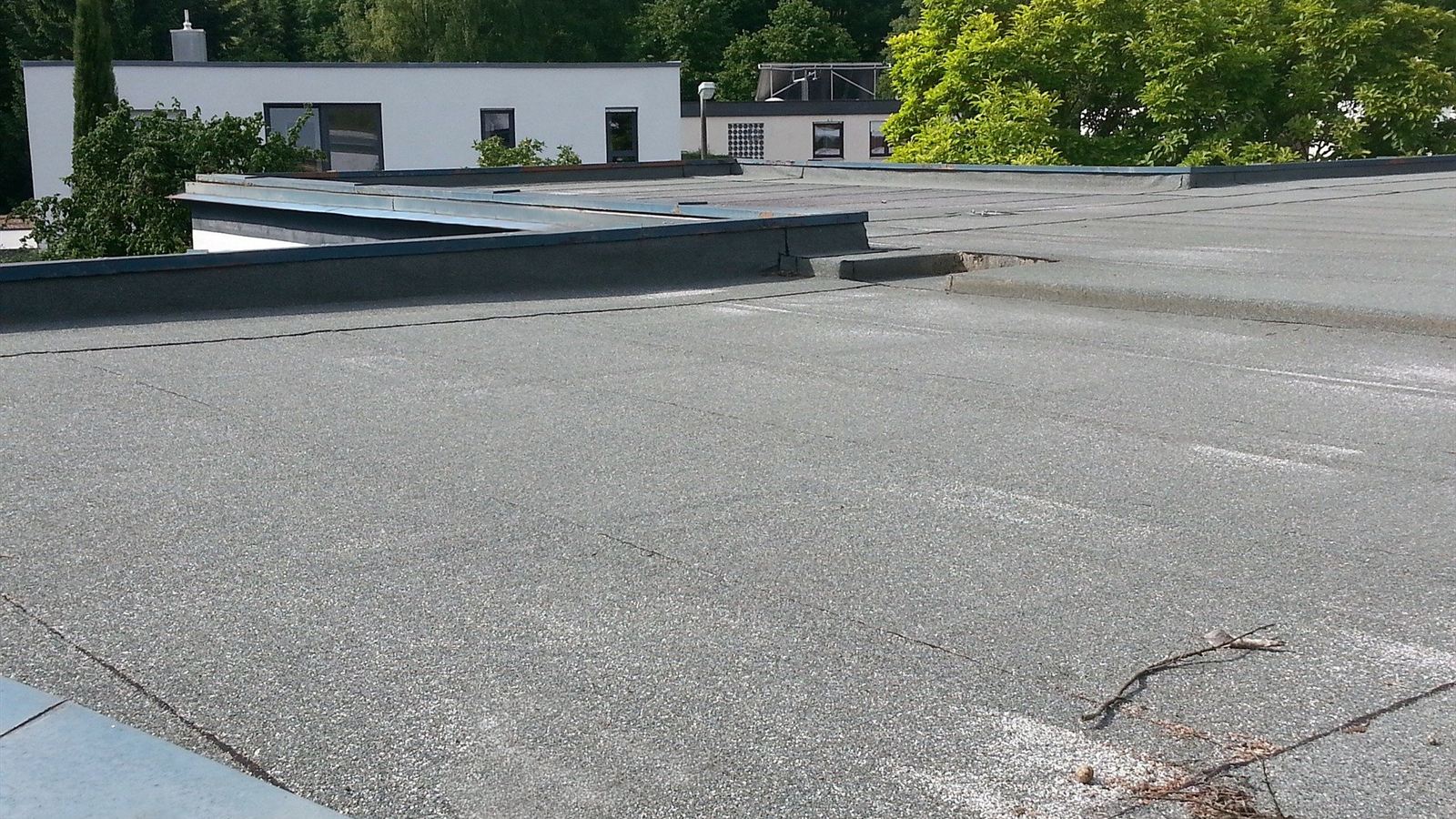
A few recent flat roofing jobs. Photographs are of work carried out by TB Rooflines, not stock images.
What Our Customers Say
Read genuine reviews from homeowners and businesses across Bristol and the surrounding area.
Reviews are loaded from Trustindex. See our privacy policy.
Falls, drainage, insulation and what actually fails
No flat roof is truly flat, and the ones that are do not last. A fall of at least 1:80 as built is the minimum, and good practice is to design to 1:40 so that construction tolerance still leaves you above the minimum. Ponding water is the single biggest predictor of early failure across all three systems.
Where flat roofs actually fail, in rough order:
- Standing water from inadequate or reversed falls, which magnifies UV damage and finds any weakness
- Upstands and abutments that are too low. Upstands should be a minimum of 150mm, and skimping here is a very common cause of water tracking back into the building
- Outlets and rainwater goods blocked with leaves and silt, turning the roof into a shallow pond
- Poor detailing around penetrations such as soil vents, rooflights and pipework
- Trapped moisture in the deck, where a new covering was laid over a wet existing roof rather than stripping it
- Movement in the substrate where the deck was not adequately fixed or was already failing
Insulation is the other half of a modern flat roof. A warm deck build up, with insulation above the deck and below the waterproofing, is now the standard approach and avoids the condensation problems that plagued cold deck construction. Where a flat roof is being replaced rather than repaired, Building Regulations Part L will generally require the thermal performance to be brought up to current standards, which affects both the build up and the finished height at the door threshold and abutments. That gets factored in at survey rather than discovered on site.
Why choose TB Rooflines for flat roofing in Bristol?
Flat roofs earned their bad name from thin felt on roofs with no fall. What TB Rooflines does differently on Bristol extensions, garages and dormers:
- Falls designed to 1:40, so construction tolerance still clears the 1:80 minimum
- Upstands at a minimum of 150mm, which is where most flat roofs actually leak
- The deck inspected rather than overlaid, so trapped moisture is not sealed in
- System chosen for how the roof is used, including fibreglass where it is walked on
- Warm deck insulation and Part L requirements factored in at survey
- A written quote setting out the work, the materials and a realistic timescale
If EPDM is not the right answer for your roof, you will be told which of the three is and why.
Flat Roofing in Bristol: common questions
How long does a flat roof replacement take?
Can you lay a new flat roof over the existing one?
Which system would you actually recommend for my extension?
Can a flat roof be repaired, or does it need replacing?
Will a new flat roof need Building Regulations approval?
Other services in Bristol
- Roof Repairs in Bristol
- New Roofs in Bristol
- Roofers in Bristol
- Fascias & Soffits in Bristol
- Guttering in Bristol
- Dry Ridge Roofing in Bristol
- Rendering & Exterior Painting in Bristol
- Damp Proofing in Bristol
- Moss Removal in Bristol
- Commercial Roofing in Bristol
- Leadwork in Bristol
- Tiled Roofing in Bristol
- Slate Roofing in Bristol
Flat Roofing in other areas we cover
Flat Roofing across Bristol and the surrounding area
TB Rooflines covers Bristol and the towns around it, working from a base in Gloucester. If you are just outside the area shown, it is still worth a call.
Unit 2, Woodrow Way, Gloucester, Gloucestershire GL2 5DX
Get a quote for flat roofing in Bristol
Tell TB Rooflines what you are dealing with and you will get a straight answer on what the work involves, what it will cost and how long it will take. No obligation.