
Leadwork in Yate
- Clear, no obligation quotes
- Local, directly employed teams
- Work left tidy
Get a Free Quote
Send a few details and we'll be in touch shortly.
Lead flashing, valleys, chimney work and bay roofs across Yate
Lead is where most roofs actually leak. Tiles and slates shed water well on an open slope. It is the junctions, where the roof meets a chimney, a wall, a valley or a dormer, that need lead to make them watertight, and it is those junctions that fail.
Good leadwork is a craft with real standards behind it, and the difference between correct work and a bodge is usually invisible from the ground until it leaks. Yate is dominated by postwar and later housing, much of it built to similar specifications at similar times. Roofs across a street therefore tend to reach the end of their service life within a few years of each other.
Where lead goes and why it fails
The main locations on a domestic roof:
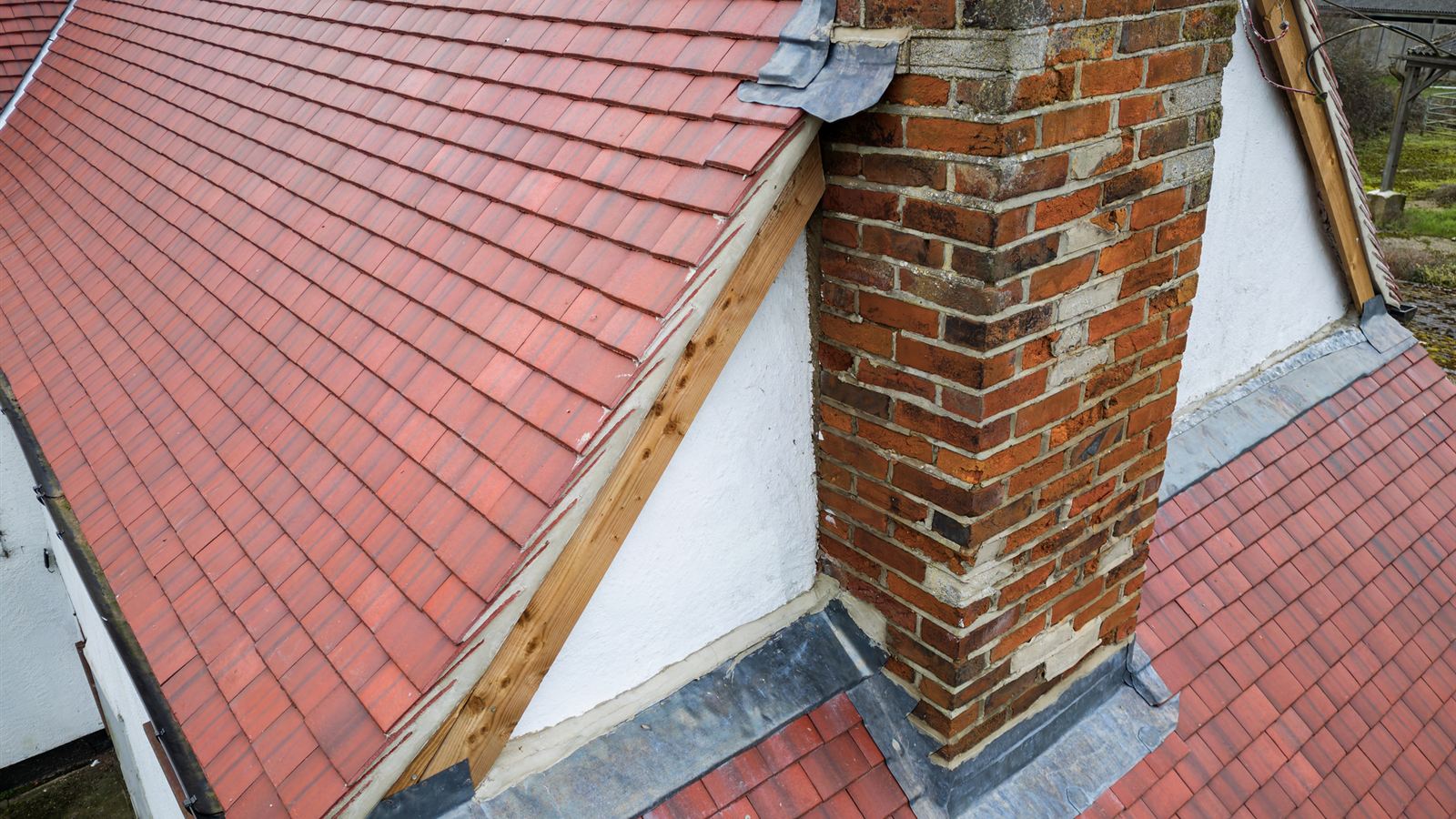
- Chimney flashings: front apron, side soakers with stepped cover flashing, and a back gutter behind the stack. The back gutter is the most common leak point on the whole roof
- Valleys where two roof slopes meet, carrying a large volume of water
- Abutments where a roof meets a wall, such as an extension against the main house
- Dormer cheeks and tops, and bay window roofs
- Parapet and box gutters, common on Victorian and Georgian property
Failure usually comes from one of a few causes: thermal movement in bays that are too long, so the lead splits along a fatigue line; mortar fillets used instead of proper lead, which crack within a few years; cover flashings not chased into the joint and simply sealed with mastic; and incorrect lead code, meaning lead too thin for the location and span.
Recent leadwork
A few recent leadwork jobs. Photographs are of work carried out by TB Rooflines, not stock images.
What Our Customers Say
Read genuine reviews from homeowners and businesses across Yate and the surrounding area.
Reviews are loaded from Trustindex. See our privacy policy.
Lead codes, joints and why patching fails
Lead is specified by code, which is a thickness. Code 3 is thinnest, through Code 4, 5, 6 and up. Using the right code for the location is not a detail, it is the difference between work that lasts decades and work that splits within a few winters.
As a general guide, Code 4 suits soakers and most simple flashings, Code 5 is the standard for aprons, valleys and back gutters, and Code 6 and above is used on larger bay tops, parapet gutters and flat lead areas. The Lead Sheet Training Academy publishes the recognised guidance on codes, spans and fixing details.
The other half of the job is allowing for movement. Lead expands and contracts significantly with temperature. Correct work respects maximum piece sizes and uses welted or lapped joints so each piece can move independently. A long run of lead fixed as one piece will split, reliably, usually within a handful of years. That single mistake accounts for a large share of the failed bay roofs and box gutters worth looking at.
- Correct code for the location and span, not whatever was on the van
- Cover flashings chased into the mortar joint and wedged, then pointed, rather than surface sealed
- Movement joints at correct centres on long runs
- Adequate laps and correct falls on valleys and gutters
- Patination oil applied on completion to prevent the white carbonate staining that otherwise runs down the wall below
On patching: a split in lead can sometimes be lead welded successfully by someone competent to do it. What does not work is mastic and flashing tape over a split. It buys a season, it makes the eventual proper repair more awkward, and it is worth declining even when it is cheaper.
Why choose TB Rooflines for leadwork in Yate?
Lead is where most roofs leak, and the difference between correct work and a bodge is invisible until it fails. What TB Rooflines does on Yate properties:
- Correct lead code for the location and span, not whatever is on the van
- Movement joints at proper centres, so long runs cannot split
- Cover flashings chased into the joint and pointed, not surface sealed with mastic
- No mortar fillets substituted for lead
- Patination oil applied, so new lead does not stain the wall below
- A written quote setting out the work, the materials and a realistic timescale
Where an isolated chimney flashing is the whole problem, that is what gets quoted. There is no case for making it a bigger job than it is.
Leadwork in Yate: common questions
How long should leadwork last?
Can you repair just the chimney flashing rather than the whole roof?
Why is my new lead staining the wall below it?
Is a mortar fillet ever acceptable instead of lead?
Is lead theft still a risk worth thinking about?
Other services in Yate
Leadwork in other areas we cover
Leadwork across Yate and the surrounding area
TB Rooflines covers Yate and the towns around it, working from a base in Gloucester. If you are just outside the area shown, it is still worth a call.
Unit 2, Woodrow Way, Gloucester, Gloucestershire GL2 5DX
Get a quote for leadwork in Yate
Tell TB Rooflines what you are dealing with and you will get a straight answer on what the work involves, what it will cost and how long it will take. No obligation.